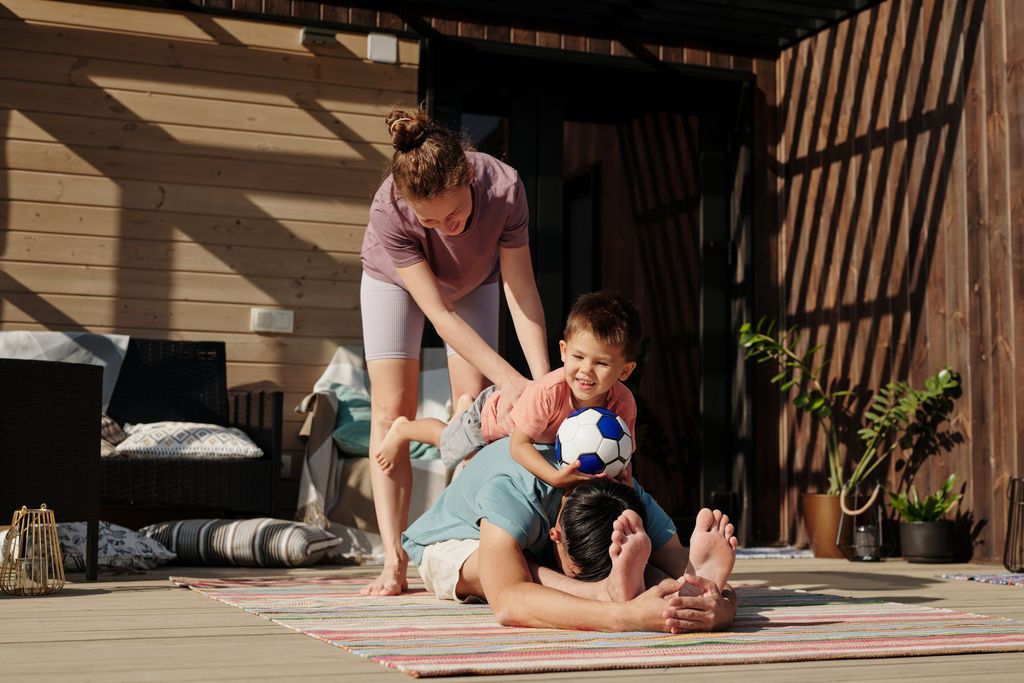
A mom putting a child on the back of a man in a forward fold

Mom! You Don't Have to Do It All — and the Research Agrees


Press PLAY to listen to this post.


"The most powerful thing a mother can model is not perfection. It is peace."

Back to school season is here, and with it comes the annual avalanche of expectations. The perfect lunch. The color-coded binder. The volunteering schedule. The worry about grades, friendships, screen time, sleep, nutrition, and whether you are somehow doing all of this wrong.

If that list made you exhale slowly just reading it — this blog is for you.

Meet the Beta Moms

A quiet revolution is happening in parenting. The Wall Street Journal recently profiled a growing group of mothers calling themselves "Beta Moms" parents who have consciously stepped back from the helicopter, the hustle, and the relentless pressure to optimize every aspect of childhood. They don't track their teens on Find My. They don't panic over a B+. And they definitely don't spend school nights gluing together solar system models.

They report they have never been happier. And their kids are doing just fine.

The context matters: data shows that working mothers today already spend more time with their children than mothers of previous generations. And yet the expectations have only multiplied — elite preschool applications, microplastic-free everything, gentle parenting, Montessori toys, and the crushing pressure to produce children who are simultaneously happy, accomplished, resilient, and grateful. Beta Moms are, in many ways, simply responding rationally to an irrational set of demands.

The yoga connection

At It's Yoga Kids®, we have always believed that the most important thing a parent can model is not achievement; it is regulation. A calm, grounded, present parent is the single greatest gift a child can receive. Not the perfect science project. Not the packed extracurricular schedule. You — steady, breathing, and here.

The Beta Mom philosophy and the yoga philosophy are, at their core, the same: less doing, more being. Less performance, more presence. Less anxiety about outcomes, more trust in the process of growing.

🌬️ Breathe before you react: The pause between a stressful moment and your response is where your power lives. A daily breath practice builds that pause into muscle memory for you and for your child.
 
🪞 Model the calm you want to see: Children learn emotional regulation by watching the adults they love. When you practice yoga, you are not just taking care of yourself, you are showing your child what it looks like to choose calm over chaos.
 
🍂 Release what you cannot control: Yoga teaches us to hold poses with effort and ease simultaneously — to try fully while releasing attachment to outcome. That is, word for word, the philosophy of a Beta Mom.
 
💚 Move together, stress less together: Family yoga is one of the simplest ways to shift the energy of a whole household. Ten minutes of movement and breath together can do more for a stressed school-night than any perfectly packed lunch ever could.

A permission slip for this school year

You do not have to be a helicopter parent or a Beta Mom. You just have to be you — breathing, present, and willing to show your child that taking care of yourself is not selfish. It is the most generous thing you can do for your family. 💚

Stay Strong. Be Calm. Be you. 🌿

With love, Michelle
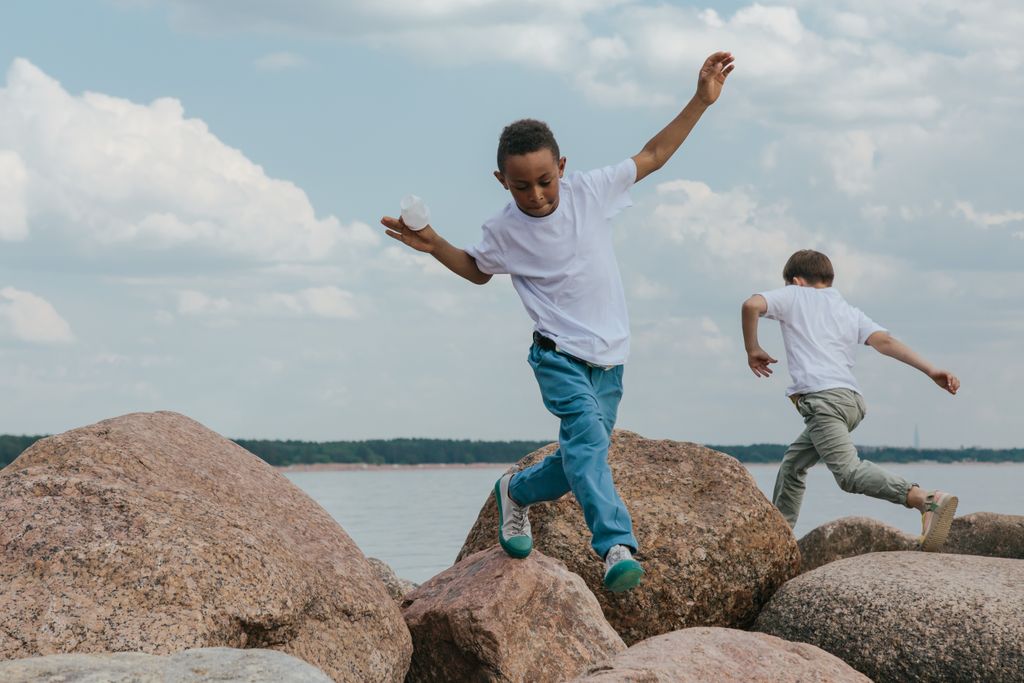
 
Two boys on rocks moving in opposite directions

Boys, Screens, and ADHD: What the New Research Says


Press PLAY to listen to this post.


"A brain still under construction is not the same as a broken brain. It is a brain that needs the right environment to finish building itself."

If you have a son who loves his phone, his tablet, or his gaming console more than almost anything else in his life — this is worth reading. Not to alarm you, but because the research is pointing toward something parents and educators need to know.

A new study has found that young boys who show signs of addictive social media use are more likely to develop ADHD symptoms down the road. Researchers were careful to note that social media addiction doesn't cause ADHD — but the connection between compulsive screen behavior and attention development in boys is too significant to ignore, especially for brains still actively under construction.

What addictive screen use actually looks like

The signs are strikingly similar to those of substance dependency: distress when access is restricted, repeated failed attempts to cut back, and real disruptions to sleep, schoolwork, and relationships. Sound familiar? For many families, this is simply a Tuesday.

The research also highlights that age 12 is a particularly fragile time for children to get their own smartphone — regardless of gender. And separate studies are linking adolescent social media addiction to more serious mental health outcomes, including anxiety and suicidal ideation.

Schools are responding. The Los Angeles Unified School District — the second-largest in the nation — recently approved some of the most strict screen time limits in the country, eliminating device use entirely for the youngest students and capping middle schoolers at six hours of screen time per week. LAUSD already had a cell phone ban in place. These new limits go further — a clear signal that the education sector sees what parents are experiencing at home.

Why yoga is a natural solution for the distracted brain

Researchers say the answer isn't simply limiting screen time — it's also about what fills the space instead. There is a meaningful difference between a puzzle game and disappearing into TikTok. And there is an enormous difference between passive screen consumption and active, embodied, mindful movement.

This is where yoga steps in — not as a trendy wellness extra, but as a clinically supported, developmentally appropriate tool for the exact challenges boys with ADHD tendencies face most.

🎯 Trains the attention system: Yoga requires sustained focus — holding a pose, following a breath count, staying present in a sequence. Every class is essentially a workout for the attention muscle that screens are weakening.
 
🌬️ Regulates impulse control: Breathwork directly engages the prefrontal cortex — the brain's impulse control center — which is the same area most affected by ADHD and by compulsive social media use.
 
😴 Restores sleep: Screen overuse disrupts sleep — one of the key warning signs of addictive behavior. Calming yoga and mindfulness at the end of the day are among the most evidence-backed tools for helping children wind down and sleep deeply.
 
💪 Channels physical energy: Boys with ADHD tendencies often have physical energy that needs a real outlet. Yoga meets that need with strength, movement, and challenge — in a structured, calming environment that helps the nervous system regulate rather than escalate.


A note to parents of boys

Your son's brain is not broken. It is building. And the environment you create around that building process matters more than any app, any diagnosis, or any test score. Movement, breath, and real human connection are among the most powerful inputs that developing brain can receive. That is what we provide at It's Yoga Kids® — for boys, for girls, for every child whose brain is still figuring out how to be in this world. 💚

Stay Strong. Be Calm. Build a better brain. 🌿

With love, Michelle

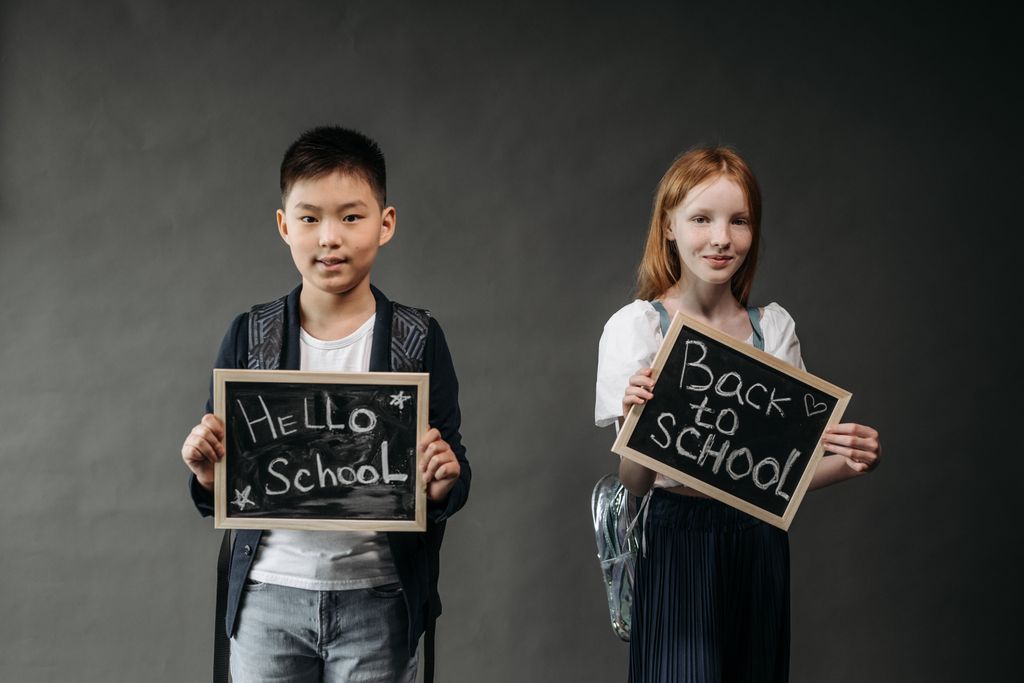
Two kids with black boards saying Hello School and Back to School

The Learning Recession: Sharpening Pencils and Focus


Press PLAY to listen to this post.


"The brain that can't focus can't learn. And the body that can't move can't focus."

Back to school season is here — and this year, we're sending our children into classrooms facing something bigger than new backpacks and first-day jitters. We are in the middle of what researchers are calling a learning recession, and it has been building for a decade.

New data from Stanford University found that reading scores are down in 83% of school districts over the past ten years, while math performance has fallen in 70%. The trend cuts across income levels, geography, race, and political affiliation. This is not a COVID story. This started before 2020 and the pandemic simply accelerated what was already in motion.

The attention span problem nobody wants to talk about

At the heart of the learning recession is something deceptively simple: children cannot focus. A recent survey found that 88% of teachers believe their students' attention spans are getting shorter. The culprits are familiar...quick-cut social media, constant screen stimulation, and a decade of content designed to grab and release attention in seconds rather than build it.

Teachers are already responding with creativity like "brain breaks," movement snacks, and attention-reset strategies mid-class. But these are band-aids on a wound that needs deeper treatment. What children need are not just occasional breaks from distraction. They need a daily practice that builds the attention muscle itself.

What yoga does that a brain break can't

A brain break gives a child a momentary reset. Yoga gives a child a lifelong skill. There is a meaningful difference and it shows up in the research.

🎯 Builds sustained attention: Holding a pose, following a sequence, and staying present through breath practice all train the same neural circuits that children need to read, solve problems, and listen deeply in class.

🌬️ Regulates the nervous system: A dysregulated nervous system cannot learn. Breathwork and mindfulness calm the fight-or-flight response and prepare the brain for the focused, receptive state learning requires.
 
💪 Strengthens body-mind connection: When children learn to listen to their bodies, to notice tension, energy, and calm, they develop the self-awareness that makes self-regulation possible. That is the foundation of every learning skill.
 
🏆 Builds confidence to try: Children who feel physically capable and emotionally grounded approach learning with the resilience and curiosity that test scores can never fully capture, but teachers see every day.

The Mississippi model — and what it tells us

One bright spot in the Stanford data is Mississippi, which climbed into the top 10 states for fourth-grade reading by investing in early childhood education, teacher development, and evidence-based learning models. The lesson is clear: investment in the whole child, not just test prep, it works.

That is exactly the It's Yoga Kids® philosophy. We have been investing in the whole child since 2005 — body, mind, and heart — because we have always known that a child who feels strong, calm, and confident is a child who is ready to learn.

This back to school season, start with the body.

Before the homework. Before the grades. Before the pressure. Give your child a yoga practice and watch what happens to everything else. Focus sharpens. Stress eases. Confidence grows. And learning becomes possible again. 💚

Stay Strong. Be Calm. Learn well. 🌿

With love, Michelle

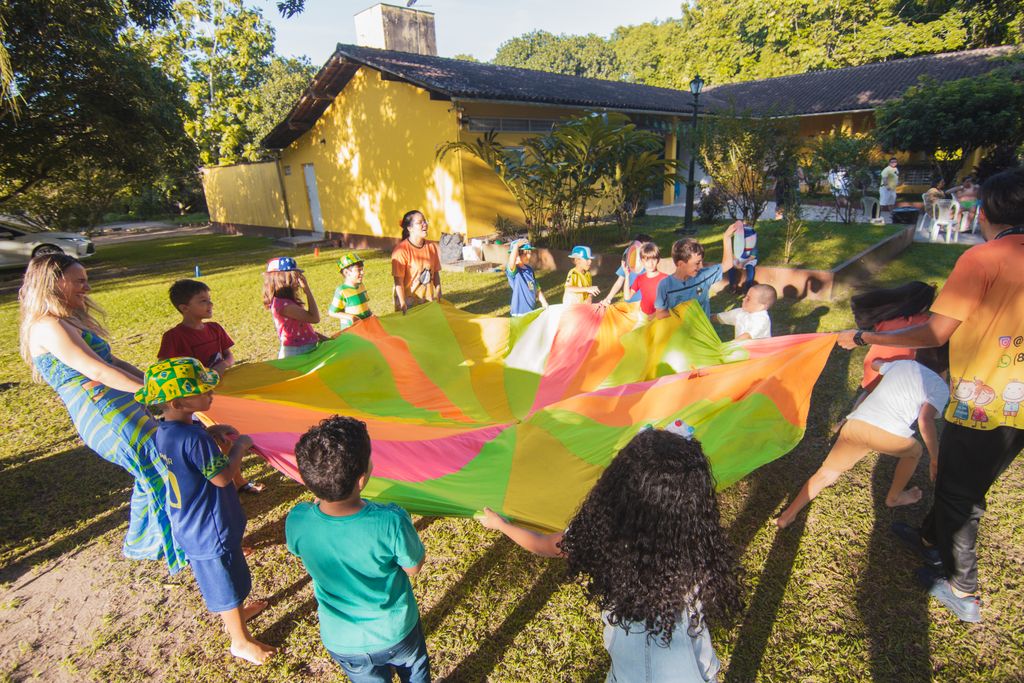
A group of kids holding a parachute at camp

America Has a Fun Problem?! Kids Yoga Is a Solution


Press PLAY to listen to this post.


"Fun is not a luxury. It is a biological need — and we are in a drought."

We have a problem. And it might be the most underestimated health crisis of our time.

A new poll of 5,000 Americans found that nearly half (48%) feel their life is currently lacking in fun. And 12% can't even remember the last time they had a full free day to enjoy themselves. We are, officially, in a fun drought. And if adults are feeling it, you can bet our children are too.

Why fun is not fluff

The same study confirmed what our bodies already know: fun means feeling less stress (72%), more motivation (57%), and feeling closer to family and friends (56%). Those are not small outcomes. Those are the building blocks of mental health, resilience, and human connection — the very things every child and family needs most right now.

And yet somewhere along the way, fun became something we scheduled in (if we got around to it) rather than something we protected as essential.

Enter: Slow Wellness

Here's a trend worth paying attention to. In 2026, slow living has emerged as a defining cultural shift — people are replacing late-night scrolling with reading, meditation, nature walks, and movement, prioritizing recovery and restoration over intensity. Gen Z has become one of the biggest driving forces behind slow living culture.

We love this. In fact, we've been practicing it since 2005. At It's Yoga Kids®, every class is built around exactly this idea...slowing down enough to breathe, move with intention, and actually feel good in your body. That is slow wellness in its purest, most joyful form. And it happens to be incredibly fun.

What fun actually looks like at camp

At It's Yoga Kids® summer camp, fun is not an afterthought. It is the entire point. And it is the vehicle through which every important lesson arrives — focus, resilience, emotional regulation, body confidence, and the deep joy of belonging to something bigger than yourself.

🎉 Games that build skills: Every yoga game at camp is secretly building balance, focus, coordination, and teamwork while kids are simply having the time of their lives.

🌿 Nature as the playground: Outdoor movement in fresh air is the original slow wellness... screens off, senses on, and every child genuinely present in their body and the world around them.

🤝 Connection as the curriculum: The friendships, laughter, and shared moments children build at camp are exactly the kind of fun the research says reduces stress and brings us closer to others and to ourselves.

✨ Joy as the goal: We have a whole High5 Habit dedicated to it — the Magic of Being YOU. Because a child who knows how to feel genuinely, freely joyful is a child who knows how to live well.

The fun prescription

This August, before summer ends, give your child — and yourself — a real dose of fun. Not screen fun. Not passive fun. The active, embodied, laughing-until-your-stomach-hurts kind. The kind that leaves everyone less stressed, more motivated, and closer to the people they love. 💚

Stay Strong. Be Calm. Have FUN. 🌿

With joy, Michelle