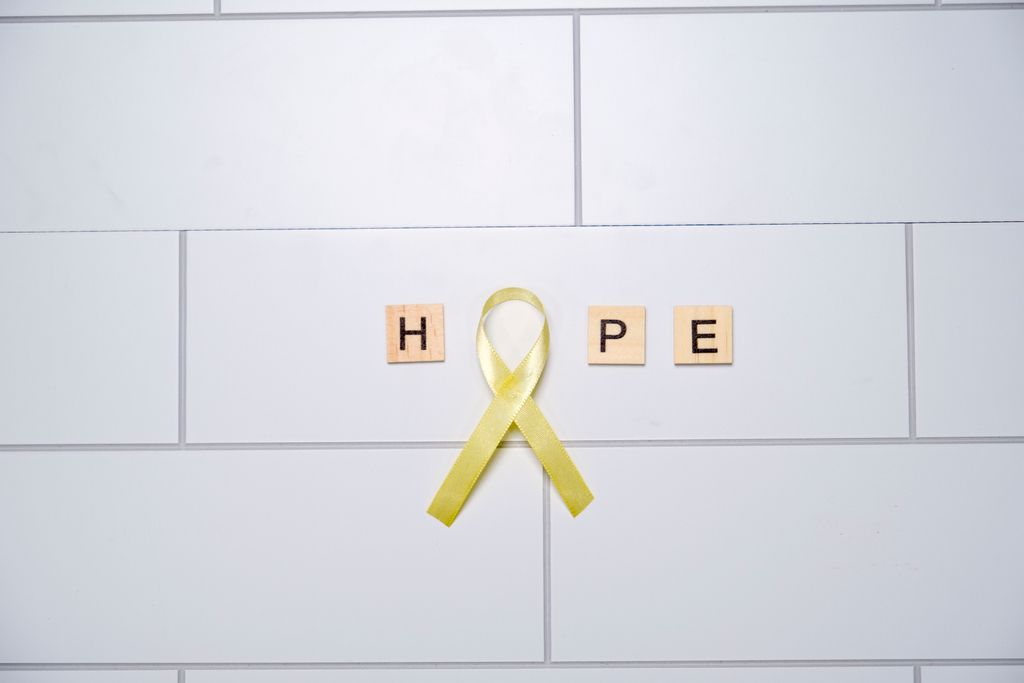
A wall with letters spelling HOPE

Mom Guilt, AI & Cognitive Surrender: The Yoga Antidote


Press PLAY to listen to this post.


A note before we begin: A few weeks ago, our community lost a 21-year-old young woman. She was bright and loved and gone too soon. This blog is written in her memory — and for every parent, teacher, and coach who has ever wondered: am I paying close enough attention?

If you or someone you love is struggling, please reach out. You are not alone. 💜
(National Suicide Prevention Lifeline: 988)


There is a moment, if you have ever sat with a grieving family, or held a child through a hard night, or simply looked at a teenager across the dinner table and felt the gulf between you, when no app, no algorithm, and no AI-generated insight can tell you what to do.

You have to be present. Fully, imperfectly, humanly present.

That is what being asked of us.

November 22 is National Survivors of Suicide Loss Day, a day to honor those we have lost and the people who loved them. And this year, in our own community, that loss is not abstract. It is a 21-year-old girl whose light went out too soon. It is a family. It is a circle of friends who will carry this forever.

We hold them with everything we have.


The Seduction of Cognitive Surrender

Here is what our culture is doing at exactly the wrong moment: outsourcing our judgment.

An MIT report published this fall warned that AI is triggering what researchers are calling cognitive surrender — the gradual erosion of our capacity to think, feel, and decide for ourselves. A study of 26,000 students found that using AI for homework raised scores by 18% but lowered independent exam performance by 20%. Students who turned to chatbots at the first hint of struggle gained, as MIT put it, “the illusion of learning.” Another MIT study found that people who used AI writing assistants struggled to recall what they had written just minutes after finishing. They had produced something. They had learned nothing.

Now bring this into parenting.

Tech companies are selling parents AI-powered tools to monitor sleeping babies, analyze toddler behaviors, score “sleep efficiency,” and tell you — in real time — whether you are doing this right. The app industry has discovered something ancient: mom guilt is a growth market. And they are building billion-dollar businesses on the eternal parental question: Am I enough?

Some of it is genuinely useful. Yes, AI can help you remember school supplies. Yes, it can build out a busy schedule. Yes, and we mean this, it can absolutely help you plan a magnificent Thanksgiving meal. 🦃

But there is a whole category of child-raising that no algorithm can touch. The moment your teenager goes quiet in a way that is different from their usual quiet. The look on a child’s face that tells you something happened today, even before they say a word. The feeling in your gut — not anxiety, but knowing — that your child needs you to stop and stay.

That is attunement. And attunement cannot be downloaded.


What Yoga Actually Trains

This is why we do yoga. Not for flexibility, though that too. Not for stress relief, though absolutely. But because yoga is, at its core, a practice of coming back to yourself.

Every breath you take on the mat is a repetition of the most important skill a parent, teacher, or coach can have: the ability to notice what is actually happening, in your body, in your mind, in the room, before you react to it.

MIT researcher Nataliya Kos’myna said of AI: “You basically didn’t engage any of the memory networks that would actually help you remember.” Yoga does the opposite. It engages everything. It makes you remember your breath, your body, your child’s face, the texture of this moment.

The IYK® High5 Habits were built on this premise. Mindfulness. Movement. Meditation. Mantra & Mindset. The Magic of Being YOU. Five practices that pull you back into your body and your instincts — away from the noise and toward the signal.

The signal is almost always right.


Relying on Your Inner Compass

A holiday spreadsheet is a beautiful thing. So is a well-organized calendar, a meal prep list, and yes — an AI that helps you find a gluten-free stuffing recipe at 10pm the night before Thanksgiving.

Use the tools. They are real and they help.

But do not outsource the part of parenting that only you can do. The conversation at the dinner table where you put your phone down and look your child in the eyes. The bedtime where you stay a few minutes longer because something feels off. The text you send to a young person in your circle, not because an app told you to, but because they crossed your mind and you listened to that.

We lost a 21-year-old. She was a daughter. A friend. A student. And somewhere in the weeks and months before, there were moments, invisible to any algorithm, where the right human presence might have changed everything.

We cannot know. We carry that.

What we can do is stay. Stay present. Stay attuned. Stay human.

That is the practice. That is the whole practice.


If You Are Struggling

You are not alone. Please reach out.

  • 988 Suicide & Crisis Lifeline: Call or text 988
  • Crisis Text Line: Text HOME to 741741
  • American Foundation for Suicide Prevention: afsp.org

And if you are a parent, educator, or coach wondering how to talk to the young people in your life about hard things, the IYK® High5 Habits give you a starting place. We are here. 


🧘 Join Us

FREE Info Session: Kids Yoga & Mindfulness Training
Saturday, November 14 · 10am · Online

Come learn the 3 skills kids need to succeed, the 5 habits to get them, and how to bring this practice into the lives of the children you love.

Register HERE


In memory of a bright light, gone too soon. May she rest in peace and may her community find strength and healing. 🕊️

Stay Strong. Be Calm. Shine Bright. 🌟
XOMichelle & the IYK® Family
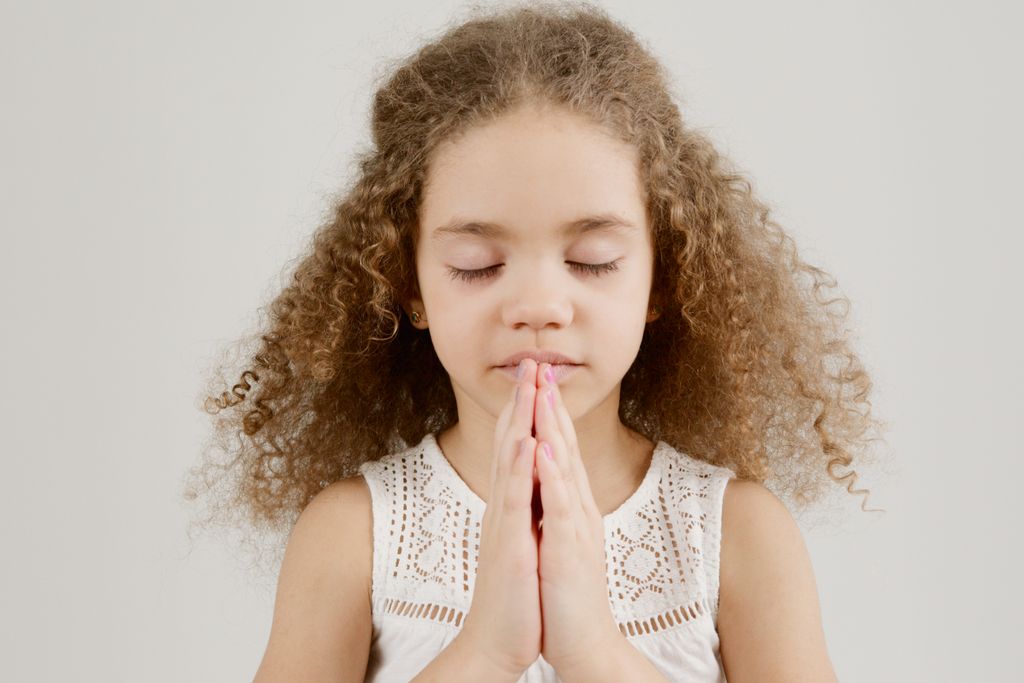
A young girl with her hands in prayer

Strength and Kindness = The Best Workout


Press PLAY to listen to this post.


Today is Veterans Day — a day to honor the men and women who have shown us what it looks like to be strong when it counts. Tomorrow is World Kindness Day — a day to remember that strength without kindness is just force.

Together, they make a perfect pair. And together, they point to the most important fitness question of our time: are we building the right kind of strength in our children?


The Science of Outer Strength

A landmark study published in the British Journal of Sports Medicine followed nearly 150,000 people for up to 30 years and found that just 90 to 120 minutes of strength training per week — that’s roughly two 45-minute sessions — was associated with a 13% lower risk of all-cause mortality, a 19% lower risk of cardiovascular death, and a remarkable 27% lower risk of neurological death. Combined with regular aerobic activity, the risk reduction climbed as high as 53–58%.

The researchers were clear: it doesn’t have to be complicated. Press-ups, squats, lunges, bodyweight exercises — whatever moves you. As one writer put it perfectly: “Lift whatever heavy things you have — weights, your dog, or the Beanie Baby collection you’ve somehow moved multiple times.”

We love group classes for the motivation and the community. But the most important thing is that you move. Consistently. Joyfully. A few days a week.

And here’s the part that doesn’t make it into most fitness headlines: strength training is not just for adults. The physical literacy children build in their earliest years — balance, coordination, body awareness, muscular strength — forms the foundation for athletic performance, injury prevention, and lifelong health. When we teach children to love moving their bodies young, we give them a gift that compounds for decades.


The Science of Inner Strength

But here’s what the mortality study can’t measure: the strength it takes to be kind when you’re scared. To keep going when you fail. To say sorry. To try again. To be a good teammate, a good friend, a good human even on the hard days.

That is inner strength. And it is every bit as trainable as a bicep.

At IYK®, we call this the High5 Habits — Mindfulness, Movement, Meditation, Mantra & Mindset, and the Magic of Being YOU. These five habits are the inner workout. They build the emotional muscles children need to regulate under pressure, bounce back from setbacks, and treat themselves and others with genuine kindness — not because they were told to, but because they know how.

World Kindness Day, observed every November 13th, is a global reminder that kindness is not soft. It is one of the most sophisticated and demanding human skills there is. It requires self-awareness, self-regulation, empathy, and courage. It requires inner strength.

Veterans model both. They train their bodies and their character. They show up for others even when it costs them something. On Veterans Day and World Kindness Day both, we honor that combination — and we ask: what would it look like to raise a generation that embodies it?


Strength Training from the Inside Out: 5 Things to Try This Week

1. Name your strong.
Ask your child: What is one thing your body can do that you’re proud of? Then ask: What is one thing your heart can do that you’re proud of? Both answers count equally.

2. Lift something together.
Take a walk, do a few squats, have a push-up contest. Make strength training a family ritual — even 15 minutes counts. The research backs it up and the memories are priceless.

3. Practice a kindness rep.
Just like a muscle rep, kindness gets stronger with repetition. Each day this week, do one intentional act of kindness as a family — a note, a call, an unexpected thank-you. Track it like a workout.

4. Breathe before you react.
The most underrated strength move? The pause. Teach your child to take three deep breaths before responding to something hard. That pause is a full-body strength exercise — and it builds the neural pathways that make kindness possible under pressure.

5. Honor someone who served.
Today and every day, name someone in your life who has served — in uniform, in community, in family. Let your children hear the stories. Strength is learned by witnessing it.


The Strongest Thing You Can Do

On Veterans Day, we are reminded that strength is shown in service. On World Kindness Day, we are reminded that it’s also shown in gentleness.

The children in your life are watching you do both. Move your body. Soften your heart. Show up anyway.

That’s the practice. That’s the whole workout.

Stay Strong. Be Calm. Shine Bright. 🇺🇸
— Michelle & the IYK® Family

P.S. 🧘 Want to Go Deeper?

FREE Info Session: Kids Yoga & Mindfulness Training
Saturday, November 14 · 10am
Online — join from anywhere

If you’ve ever wondered how to bring inner and outer strength into the lives of the children you love — as a parent, teacher, coach, or wellness professional — this session is for you.

In one hour, you’ll discover:

  • The current challenge for children’s physical fitness and mental health
  • The 3 skills kids need to succeed and the 5 habits to get them
  • A vision for incorporating yoga and mindfulness into your everyday life

This is how it starts. One conversation. One decision. A lifetime of impact.
Register HERE

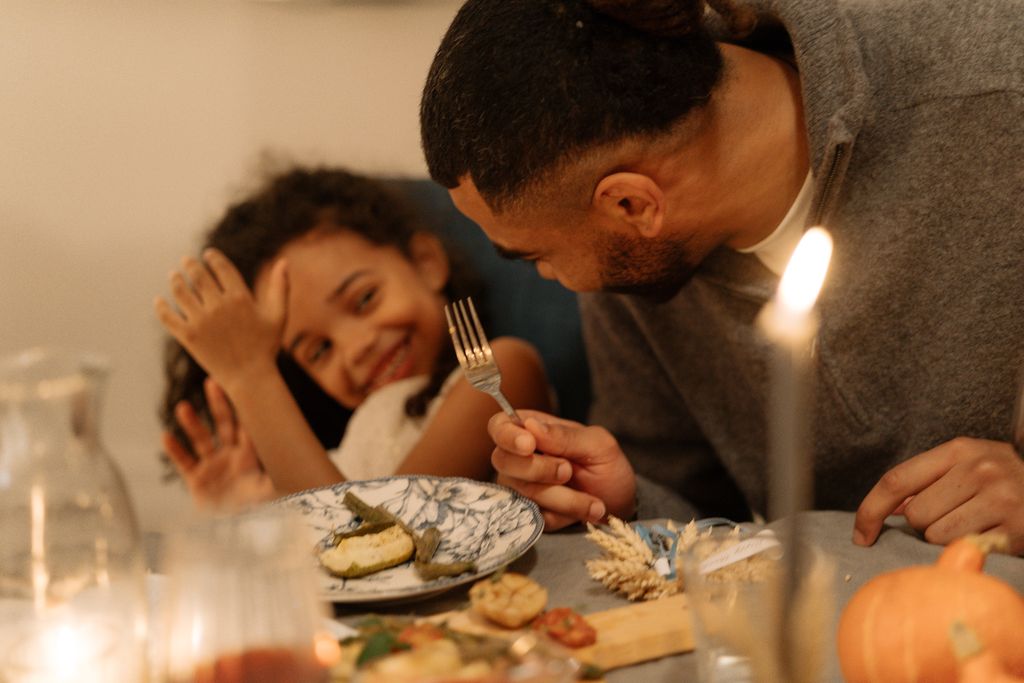
A daughter with her dad holding a fork at Thanksgiving

The Thanksgiving Table Is a Yoga Practice


Press PLAY to listen to this post.


There is something quietly profound that happens every Thanksgiving that we tend to overlook in the rush to brine the turkey and find the good napkins.

We slow down. We gather. We eat together. We say out loud, sometimes awkwardly, always meaningfully, what we are grateful for.

That, right there, is a yoga practice. And it might be the most powerful one of the year.


Gratitude Is Good Manners And Medicine

The science on gratitude is as warm as a bowl of stuffing. Research consistently links regular gratitude practice to lower cortisol levels, better sleep, stronger immune function, and higher overall wellbeing. For children especially, learning to name what they are thankful for — people, moments, feelings, the smell of pie — builds the emotional vocabulary that underlies resilience, empathy, and mental health.

At IYK®, we call this the Magic of Being YOU — one of our High5 Habits. It is the practice of noticing what is good, what is yours, and what makes you feel alive. Thanksgiving hands us a ready-made invitation to do exactly that, all day long, with the people we love most.


Intuitive Eating: The Holiday Superpower

Here is what most of us do at Thanksgiving: eat past the point of comfort, spend the next 48 hours negotiating guilt, and make at least one remark, to ourselves or our children, about needing to “work it off.”

Here is what the research actually supports: trusting your body.

Intuitive eating, developed by dietitian Evelyn Tribole and nutrition therapist Elyse Resch, is built on a simple premise — your body already knows what it needs. As psychologist Susan Albers, PsyD, puts it: “We all have an internal eater in us, but it’s buried under diet culture.”

The ten principles of intuitive eating include rejecting diet thinking, responding to hunger, seeking enjoyment in eating, and respecting your body. None of them say you cannot have pie. All of them say you should stop fighting yourself at the table.

For families with children, this is transformative. Kids are naturally intuitive eaters until we teach them not to be. When we model a relaxed, grateful, joyful relationship with food at Thanksgiving, we give them something more lasting than any meal: a template for how to take care of themselves.

A few things to try this Thanksgiving:

  • Before you eat, take three deep breaths together as a family. Settle in. Arrive.
  • Ask everyone at the table to share one thing they are grateful for — body, mind, or heart.
  • Eat slowly enough to taste it. Put your fork down between bites. Let your body catch up.
  • Skip the guilt commentary. No “I shouldn’t” or “I’ll pay for this later.” Just: this is delicious and I am here with people I love.

That is not indulgence. That is wellness.


Move Together. It’s the Best Part.

One of the most underrated Thanksgiving traditions is the one that happens before or after the meal — the walk, the backyard football game, the chaotic living room dance party that nobody planned.

Movement metabolizes more than food. It metabolizes emotion. Stress, excitement, the particular overwhelm of too many people in a kitchen — all of it moves through the body when we move our bodies. The research on collective movement, what sociologist Émile Durkheim called collective effervescence, shows that when people move together, they feel more connected, more joyful, and more like themselves.

This Thanksgiving, make movement part of the ritual. A family walk before dinner. A few stretches on the living room floor. Or, and we may be a little biased here, a yoga class together.

🙏 Join Us: Thanksgiving Family Yoga
Sunday, November 8 · 11am
Metta Yoga · San Rafael
Register HERE

Before the cooking begins and the cousins arrive, come move together. This class is designed for the whole family...every age, every ability, every level of yoga experience (including none). We will breathe, stretch, laugh, and set the tone for a holiday week that feels as good as it tastes.

The Table Is Already Set.

This Thanksgiving, you do not need a new wellness plan or a post-holiday detox. You need what you already have: the people around you, the food in front of you, and the breath in your body.

Move a little. Eat with joy. Say thank you out loud.

That is the practice. That is the whole thing.

Stay Strong. Be Calm. Shine Bright. 🌟
XO-Michelle and the IYK® Family

 🇺🇸 Veterans Day IYK® Camp · Wednesday, November 11
The Presidio · San Francisco
Register HERE

While the grown-ups have the day off, the kids get an adventure. Join us in one of San Francisco’s most beautiful outdoor spaces for a full day of yoga, movement, and mindfulness in nature. It’s the perfect way to honor the day.

A person holding money in a fan

Money Stress and Midterms — How Yoga Helps Families Through


Press PLAY to listen to this post.


"Our stress can become their stress. But our calm can become their calm too."

October is a month of hard things. Midterms. Election season. Rising costs. The particular stress of a calendar that feels like it is sprinting toward the end of the year. And somewhere in the middle of all of it, children are watching, absorbing the energy in the room, sensing the tension in the air, and often lacking the words or tools to make sense of what they feel.

This is exactly when yoga matters most.

Parents would rather talk about sex than money

A new survey from Acorns found something striking: 57% of parents with children ages 6 to 17 said they find it easier to discuss sex, drugs, and alcohol than money. One in three said their own financial anxiety is the main reason they avoid the topic altogether, and with today's inflation, rising costs, and genuine concerns about making ends meet, that anxiety is deeply understandable.

Here's the challenge: research shows that a family's financial stress can affect childhood brain development as powerfully as sleep deprivation or chronic stress. Children absorb what we feel even when we don't say it. So the goal is not to protect children from all awareness of stress. It is to give them, and ourselves, the tools to move through it without drowning in it.

How yoga helps families have hard conversations

Yoga doesn't teach children what to think about hard things. It teaches them how to be with hard things, and that is a far more transferable skill. Here's how the IYK® High5 Habits show up in the hardest moments:

🎯 Mindfulness — notice before you speak

Before a hard conversation, a mindful breath helps both parent and child arrive with more presence and less reactivity. Notice what you're feeling. Name it. Then begin.

⚡Movement — walk and talk

Some of the most important conversations happen in motion. A walk, a stretch, or even a simple yoga session before a difficult discussion moves stress hormones through the body and opens the nervous system to genuine connection.

🌿 Meditation — create calm before the storm

Even two minutes of stillness before a stressful conversation — money, grades, the news — lowers cortisol and helps both parent and child stay regulated when the topic gets hard.

💬 Mantra & Mindset — reframe the story

"We make smart choices with our money." "We take things one step at a time." "We can do hard things together." Positive mantra doesn't deny difficulty, it builds the mindset that faces it with resilience rather than shame.

✨ Magic of Being YOU — your voice matters

Which brings us to the ballot box. One of the most powerful things we can model for our children is civic courage, the belief that your voice matters, your vote counts, and showing up is always worth it. Vote on November 3. 

What to say when money is tight and kids are watching:

✔️ Keep it age-appropriate — "We're being careful with our money right now" is enough for young children

✔️ Name your feeling, not your fear — "I feel stressed" is honest; a full financial breakdown is too much

✔️ Build financial habits early — saving birthday money, making choices at the store, understanding needs vs. wants

✔️ Breathe together first — regulate yourself before you speak; your calm is contagious

October is a lot. But you don't have to carry it alone — and neither do your children. Breathe. Move. Talk. Vote. And remember that the way you show up in the hard moments is the most important lesson you will ever teach. 

Stay Strong. Be Calm. Show up. 🗳️

 XO-Michelle